Week 11: Project narrative
Current research question:
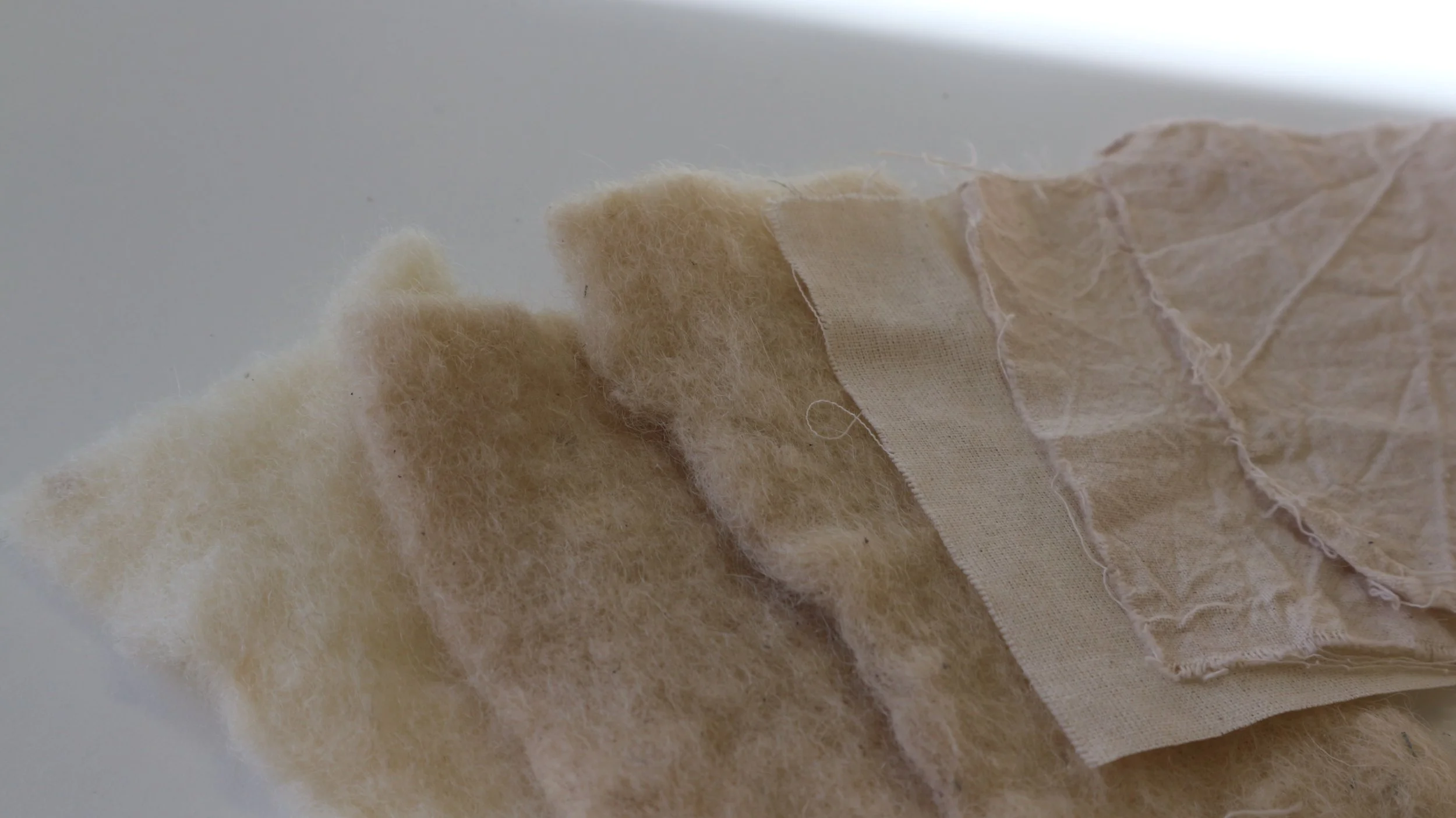
Figure 1. Ecodye Kina shells with strong wool and calico farbcis [Photograph]. Note. Photographed by author
How can material properties of Kina (New Zealand sea urchin) be utilised in homeware design, to tell a story connecting people to product?
Kina’s natural dye
Since I had received the Kina shells last week, I could finally experiment with the real material and no hesitation. I wanted to start off strong with a test I had been researching and thinking about in the back of my mind for a couple of weeks. Ecodying, testing to see if there was any natural dye I could extract from the kina shells. This idea is inspired by my previous eco-dye experiments and is supported by researchers’ successful experiments with other types of sea urchins. A group of artists in Australia boiled the sea urchin (not specified but likely the long-spined sea urchin, short-spined sea urchin or the red
sea urchin that are commonly found around Australia (McLaren, 2023)) with fabric, adding salt and vinegar, and extracted a pale pink colour (ARC Centre of Excellence in Synthetic Biology, 2026). Another research paper on purple sea urchins in Japan suggests a reddish-brown dye, and purple with a mordant (Fujimoto & 藤本, 2010).
I wanted to transfer similar techniques to Kina as well to see if my results differ from those of previously studied sea urchins.
First, I washed 3 strong-wool and 3 calico samples with detergent.
Cleaning the shells
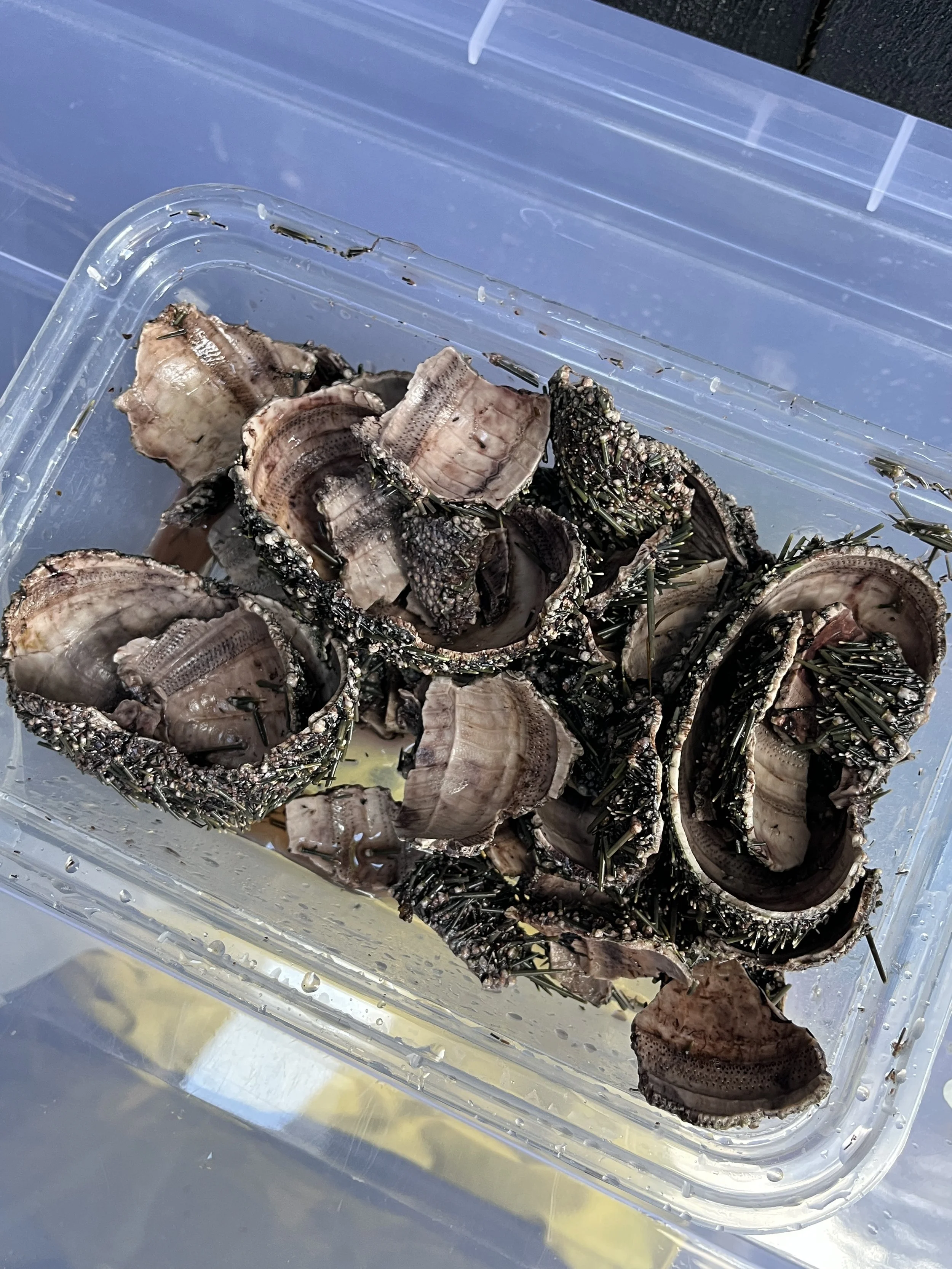
To avoid damaging the shells with any harsh chemicals or rough scrubbing, I started by rinsing and gently removing any guts and internal organs left on the shell. This process took a while as the shells came slightly crushed, resulting in many smaller pieces. Some of the spines also came off as I was handling them, which I later found out that Kina shed their spines at the end of their life, meaning they were already loosening.
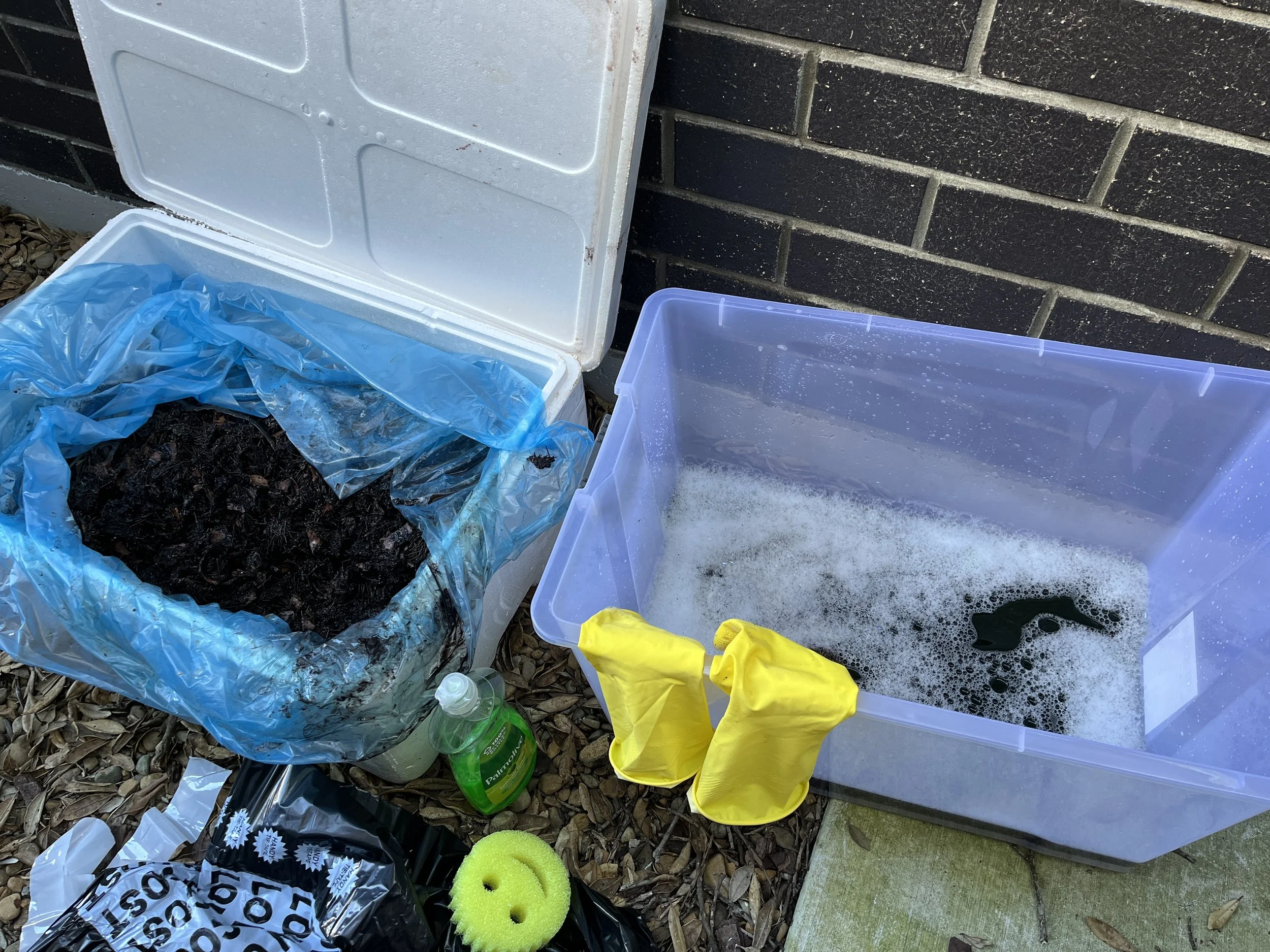
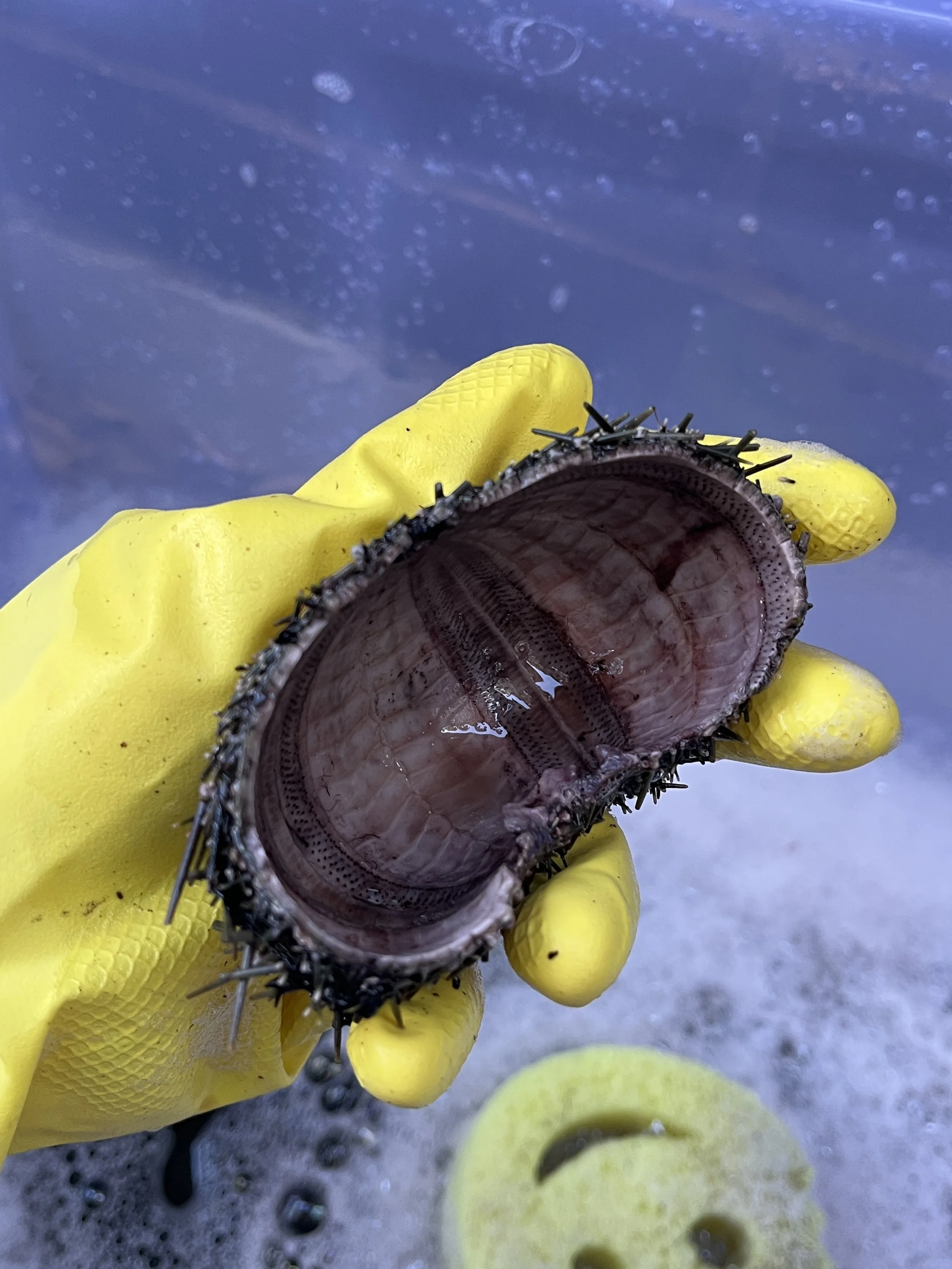
Figure 2,3,4. Process of cleaning Kina shells [Photograph]. Note. Photographed by author
I brought the water to a boil before adding my strong wool and calico samples, and then adding a portion of my washed kina shells.
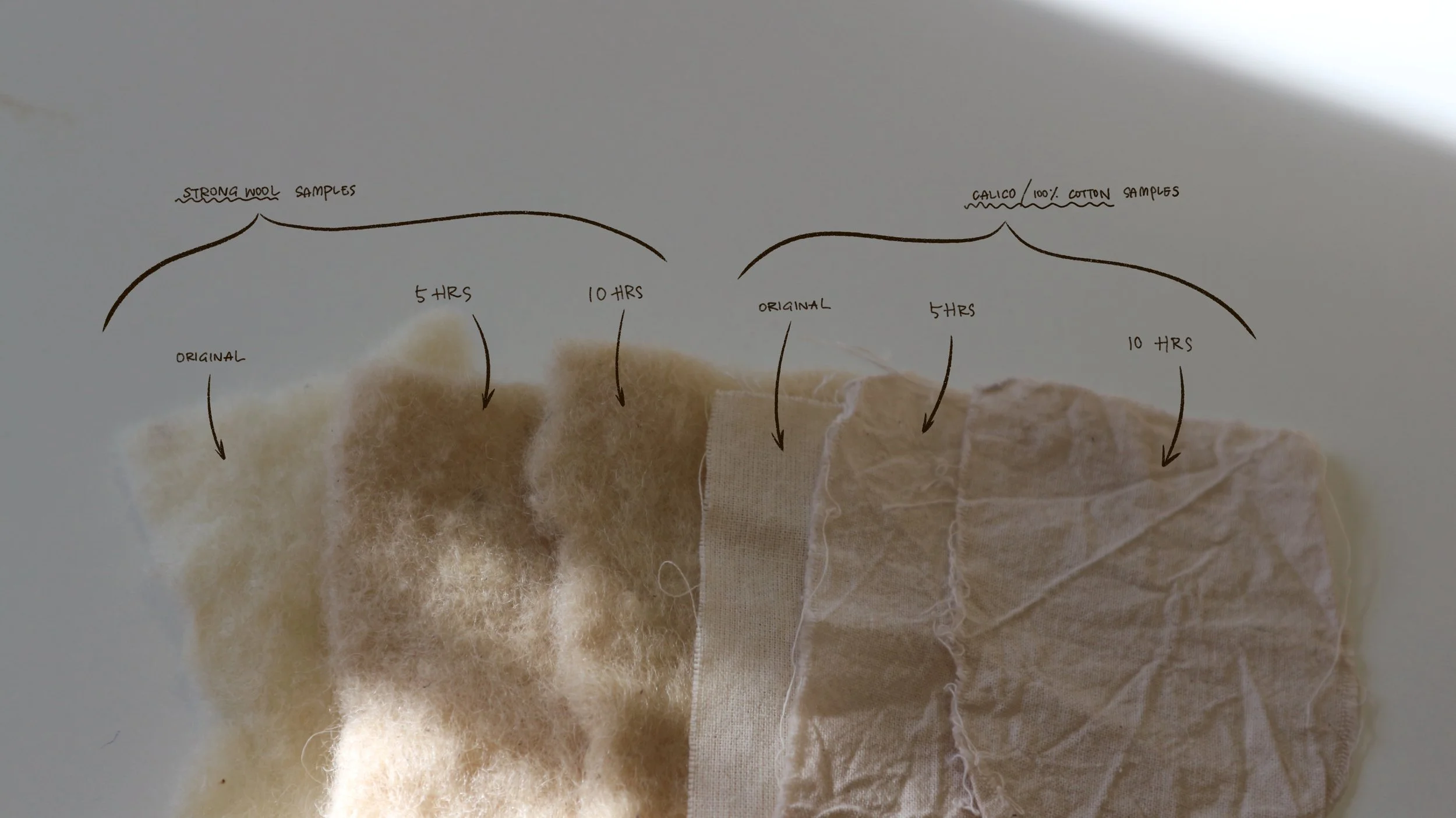
After leaving them to boil for an hour, I let them soak in the dye bath. I took out one of each fabric at 5 hours and 10 hours.
The results were unfortunately not as I had hoped. When washing the Kina shells, there were traces of reddish-brown, so I expected to see a similar or darker colour transferred. Instead, I got a beige colour that was just slightly darker than the original fabric.
Figure 7. Hero photography of ecodyed samples [Photograph]. Note. Photographed by author
This made me wonder whether Kina had the same pigment as other sea urchins, or whether I was dyeing with the wrong part of the sea urchin? Did washing the kina shells remove a part that had pigment? Could it be because I didn’t use a mordant, or is there a way to
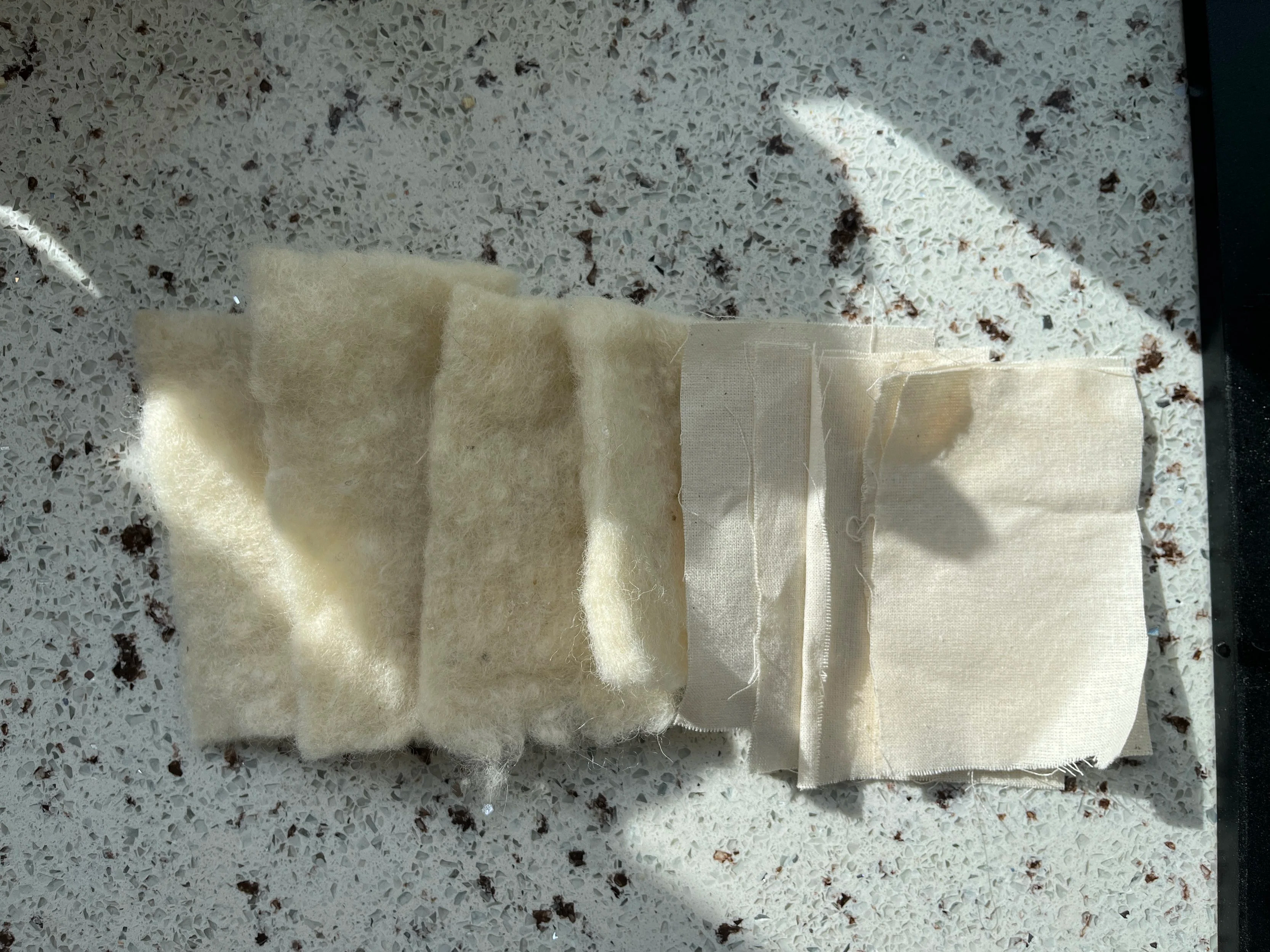
Figure 5. Original samples of strong wool and calico [Photograph]. Note. Photographed by author
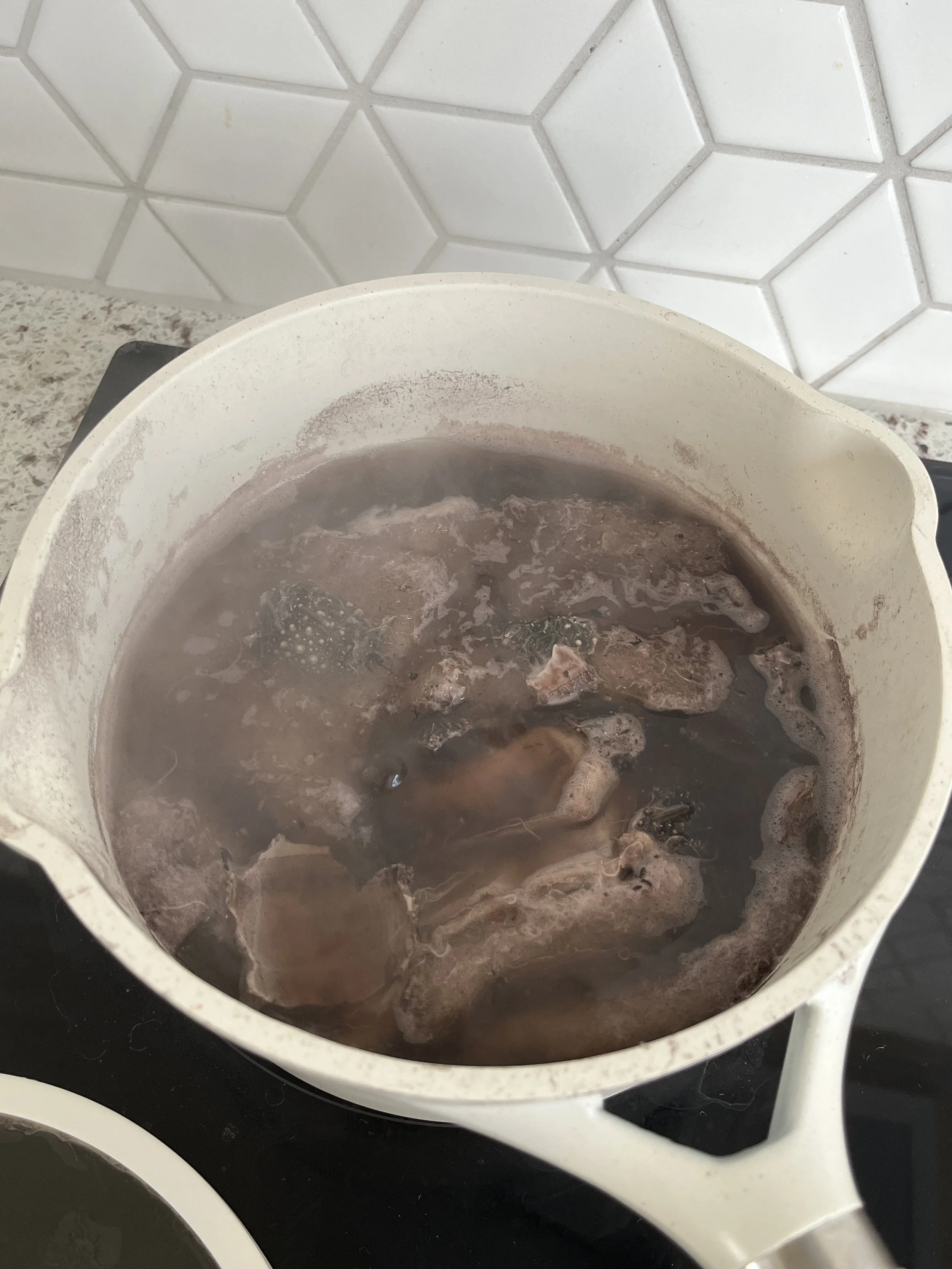
Figure 6. Boiling process. [Photograph]. Note. Photographed by author
prepare the shells before boiling that would secure or emphasise the colour? This will require more experiments and research if I want to continue researching kina and their pigments.
Project narrative (400 words)
400 word abstract outlining this proof-of-concept project. My timeline and goals for the 6 weeks, along with the successes and reflection points are included.
Reference list
ARC Centre of Excellence in Synthetic Biology. (2026, April 23). Colours to dye for [Video recording]. https://www.youtube.com/watch?v=t_AewF32vZY
Fujimoto, S., & 藤本滋生. (2010). Method for extracting pigment of purple sea urchin and method of dyeing (Patent No. JP2010100791A). https://patents.google.com/patent/JP2010100791A/en
McLaren, E. (2023, June 26). The sea urchins of Sydney. The Australian Museum. https://australian.museum/blog/amri-news/the-sea-urchins-of-sydney/