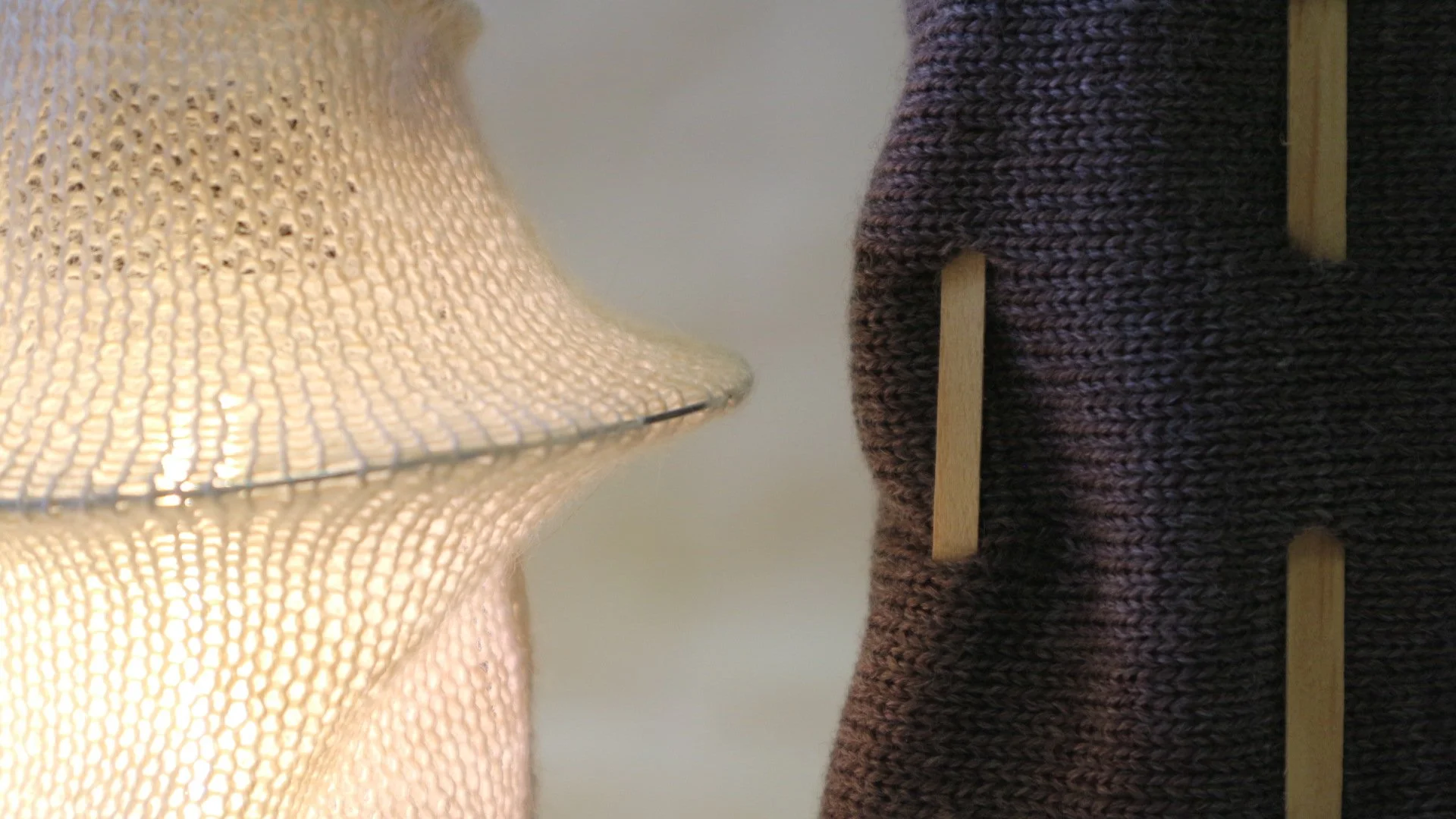
Week 5: Preparing for Te Hākari
Current research question:
How can strong wool be explored in designing homeware to strengthen cultural connections and bring people together?
Presenting my artefacts (week 4)
This week we weren’t given any time to explain our making, instead our work and blog posts were to speak for themselves. Although I had already talked to most of my classmates outside of class, meaning they already knew my thinking, this approach was still beneficial, as I could gauge which part of my project stood out and was interesting to people.
Group feedback (hand-written letters)

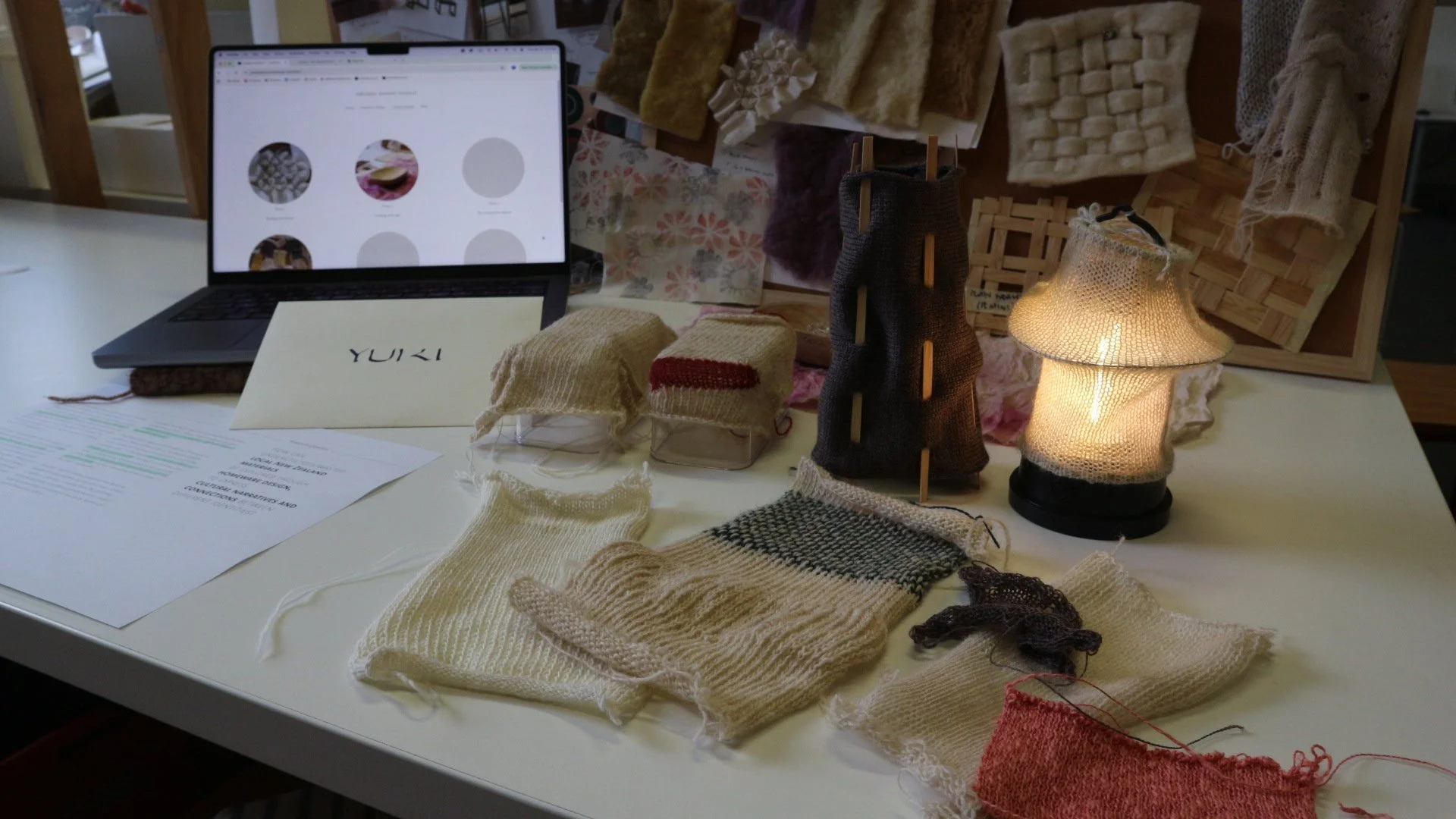
I really enjoyed this way of giving and receiving feedback. Feedback felt more relevant and tailored to our process. I could feel my peers thought hard about what would benefit me most. Long paragraphs also encouraged them to explain their feedback, helping me understand it more clearly.
Unfortunately, it looks like I am still designing too safely; even my peers can see a bit of hesitation in my process. I felt like I needed to figure out what is holding me back, and lean more into letting myself ‘fail’. I was suggested to think about something that potentially hadn't been explored to expand the potential of existing methods, for example, instead of knitting with yarn, what if I used a coarser thread like wire or fishing thread?
Another peer was interested in my thinking back in weeks 1 and 2, when I was exploring the relationship between material culture and Maori culture, and how this related to my own culture too. She mentioned that the interplay between material and form from different cultures working together in one product could be very interesting. She asked, " Are there similar techniques or prominent materials used across cultures?” Another peer suggested I look at Noguchi Isamu, a Japanese-American furniture designer, as some of my making reminded her of him.
The culture and identity part of my research question still remains too vague to understand. Another peer suggested that to clarify this for myself, I could brainstorm and map the connection between culture and homeware. For example, in what part of homeware is cultural connection most evident, or most needed? Would it be in the kitchen, where people connect through food, in which case I could design Tupperware or ceramics?
One of my classmates could see that I am passionate about craftsmanship, but questioned if it was appropriate for my target audience. For example, if my product is going to be mass-manufactured, the unexpected outcome of natural eco-dying might not be feasible. I thought this was a very good point and realised that refining my target audience will help tighten and push my product in the right direction.
These letters gave me multiple new directions to consider as I develop my project. I can see that, even from the outside, my project feels a bit vague and lost in terms of what I am designing.