Week 4: Cordiality
Current research question:
How can underutilised/wasted local New Zealand materials be explored in products for the home environment, to preserve and tell the rich story of culture and history of land and people in New Zealand?
Presenting my artefacts (week 3)
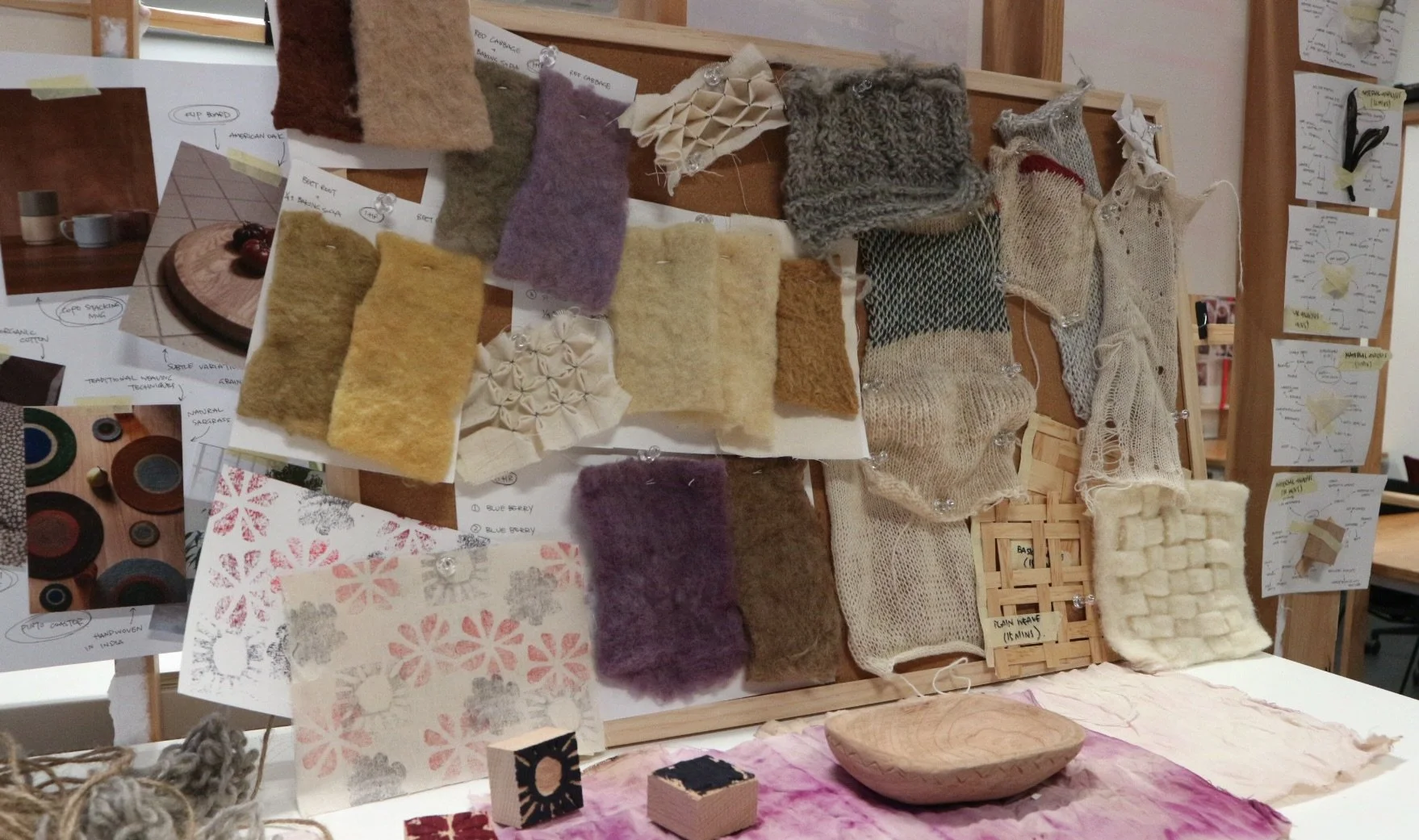
Although I was not able to present any new work this week, I felt well enough to present and decided to at least receive feedback on my previous work. This was still beneficial, as I was able to talk about my previous work with a more developed explanation and thought, and we had different peers to discuss with. I curated the best and most interesting of my work from weeks 1 and 2, and discussed that I was following a material-driven design process, exploring different properties of a particular material. My exploration led me into
Group feedback (oral)
knitting and strong wool. Although my making did not develop this week, it gave me a chance to reflect on my progress thus far. I explained that I was drawn to slower, hands-on making processes because they made me feel calm and grounded. This reflection led me to want to understand the relationship between the creator and the material; I felt there was something valuable there that I could potentially explore.
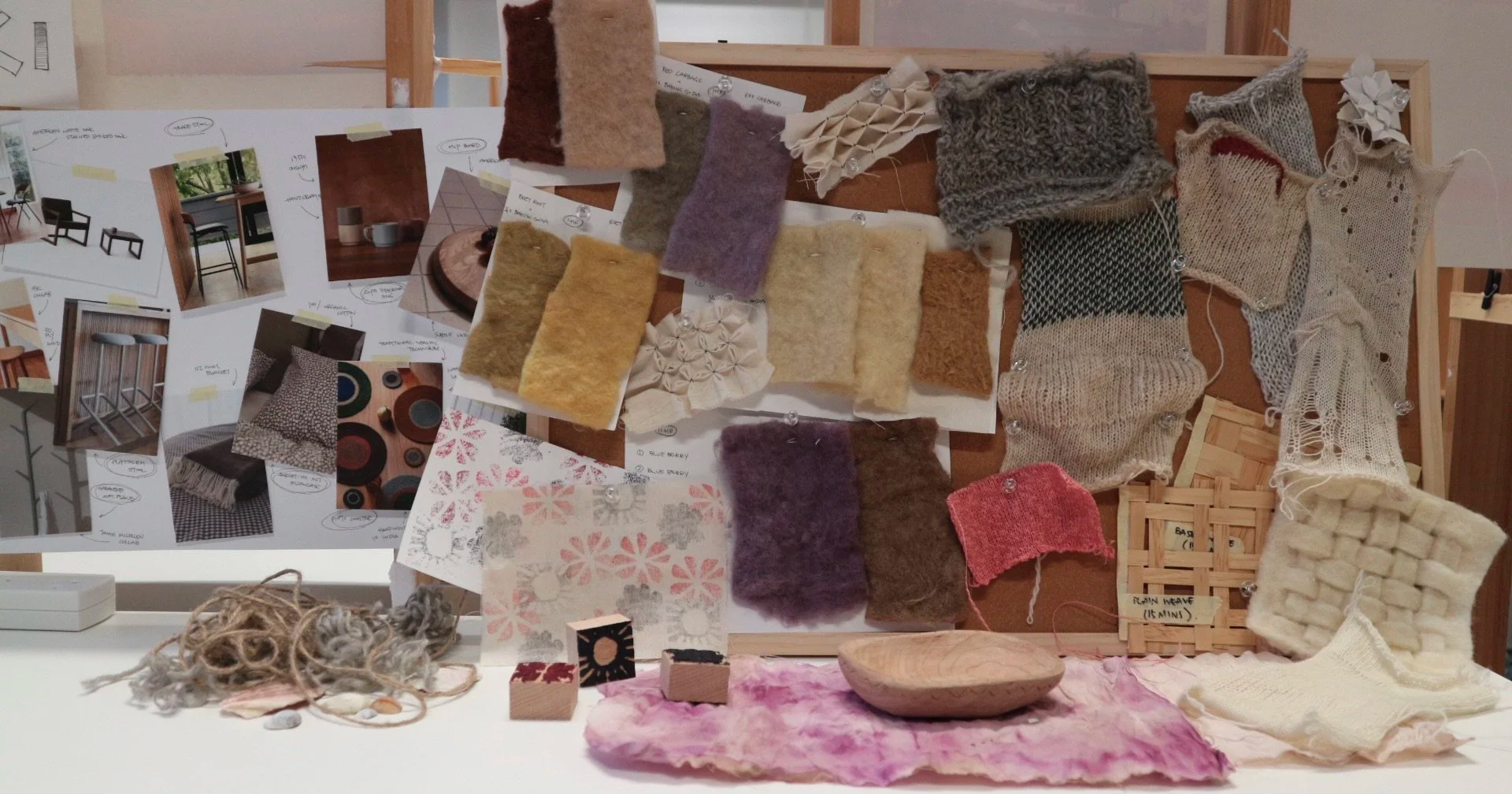
My group was understanding and still provided me with valuable feedback this week. I was encouraged to specify my target audience. If I am working with New Zealand materials, is my product for kiwis, or is it designed to share stories about New Zealand with outside communities? Another said I should think about the context and environment my product might sit in; he mentioned the importance of a narrative surrounding my making. They liked that I was reflecting and making intentionally. They helped me realise that my making mainly consisted of swatches and single-material explorations. I was suggested to bring materials together and look at different forms. Breaking away from just a square or flat surface, draping could be an
avenue I look into, as it is a technique that requires engagement with material properties.
Another one of my peers noted my interest in knitting and recommended that I research the Shima knitting machines, as they would fit well with my textile knitting exploration and background in clothes-making. She also recommended that I look at the work of one of our lecturers, Rachelle Moore. From this feedback, I have gathered that my next step is to design with forms in mind and to be more experimental with my making.
Continued development though artefacts
Form building with knitting
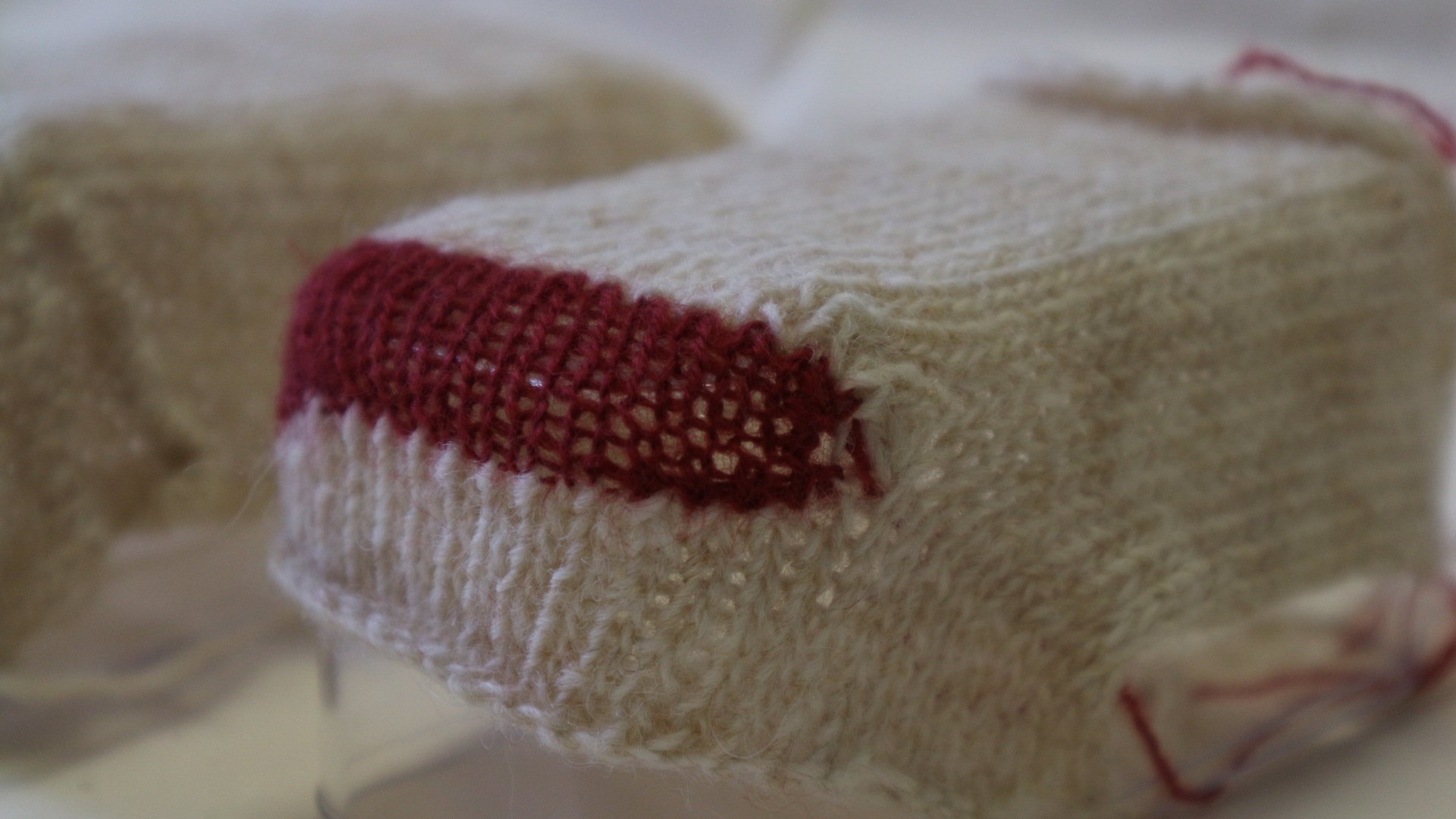
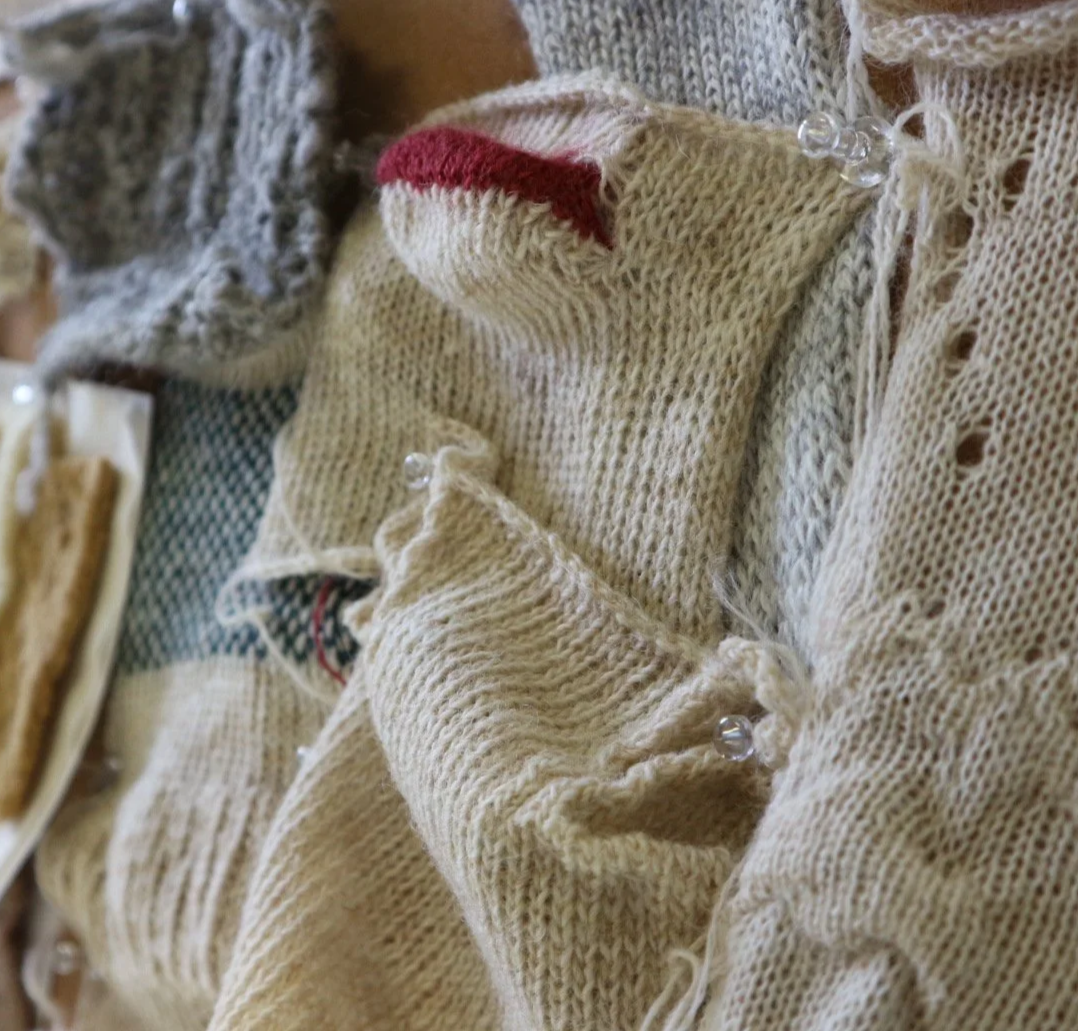
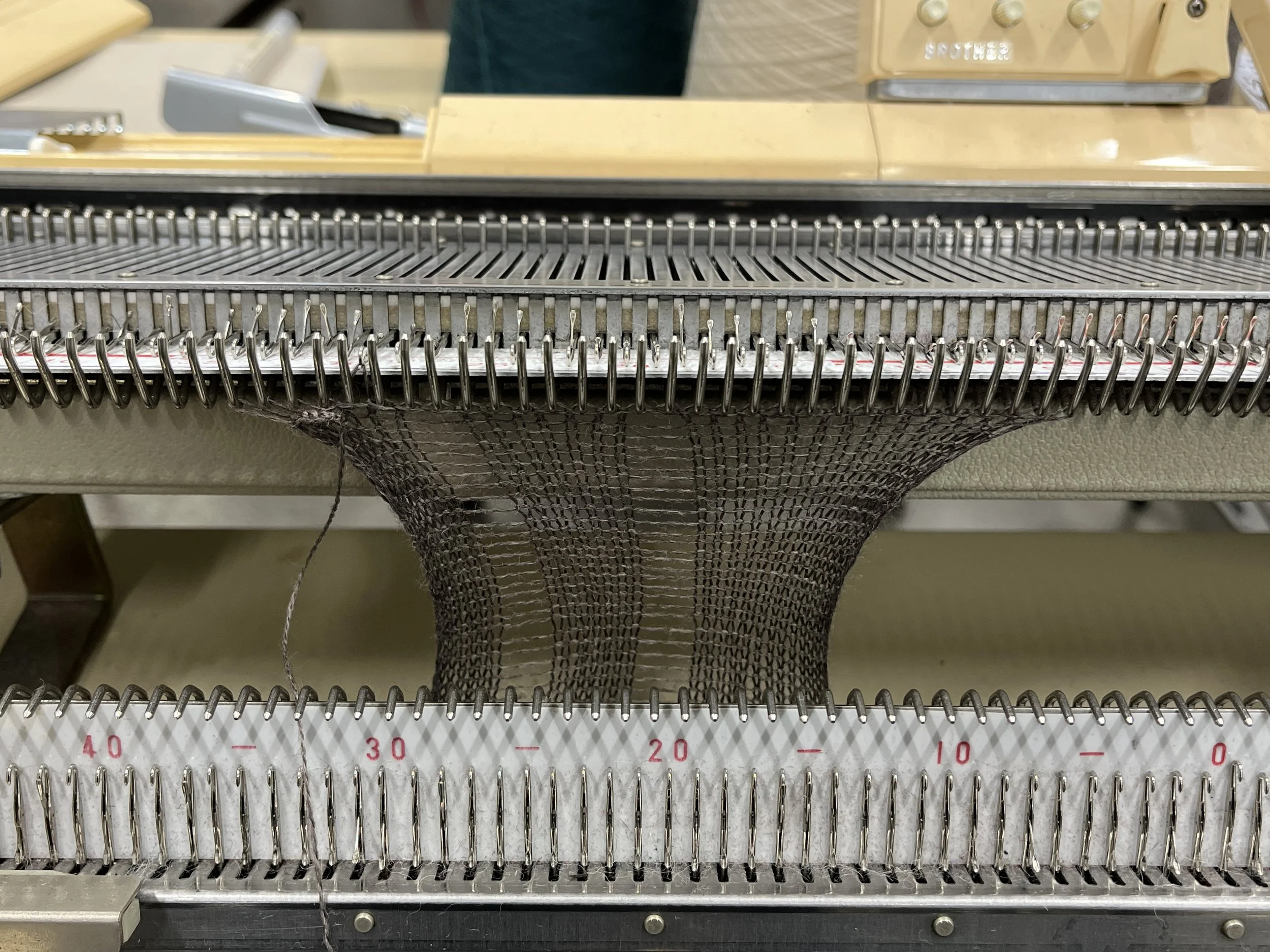
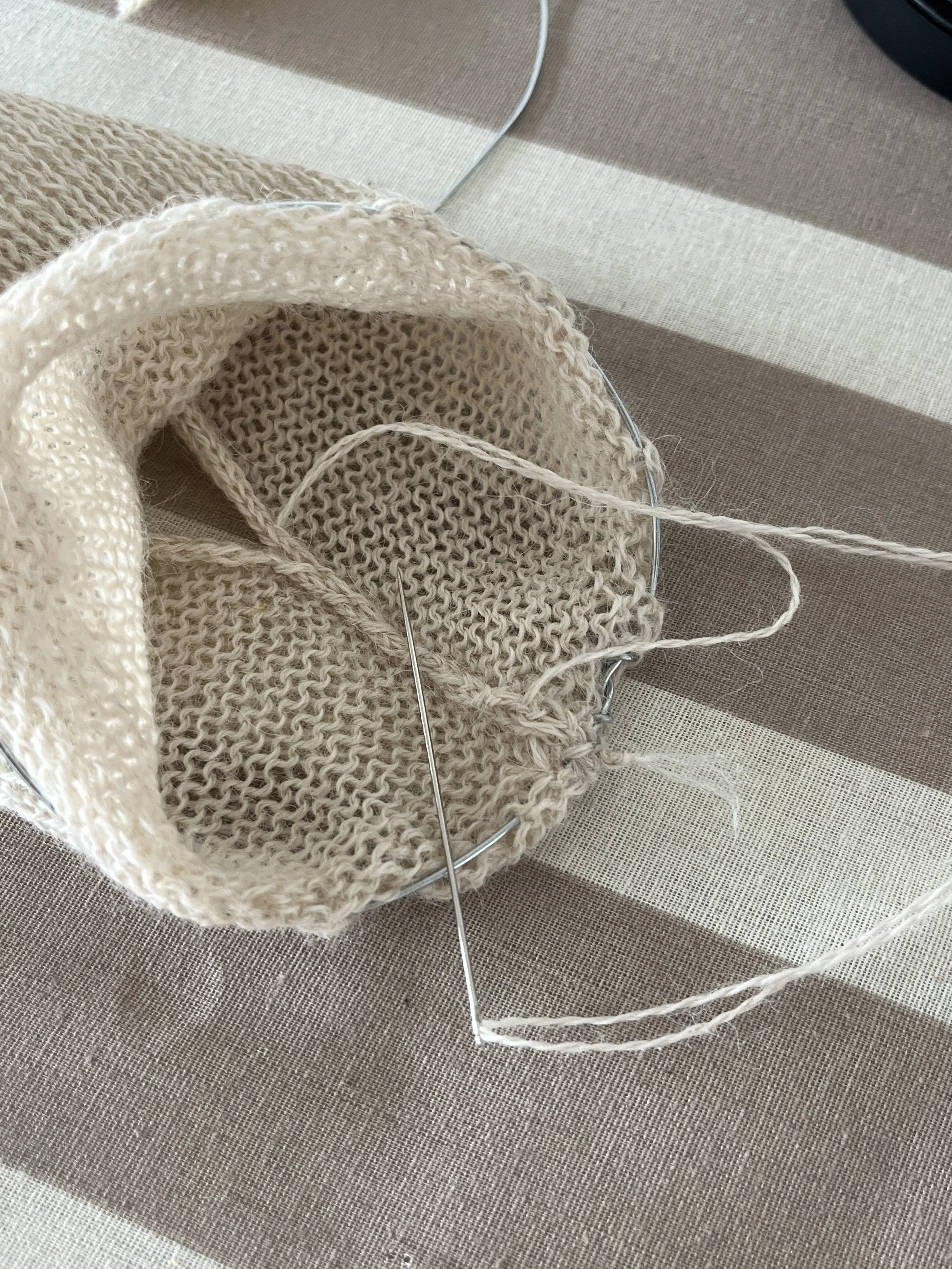
To incorporate feedback from my peers, I investigated form-building through knitting. To break away from flat surfaces, I learnt a new technique involving increasing and decreasing stitches to create volume in one area. This added dimension and texture. I also tried, as suggested, to drape a knit fabric in the same way to compare the two
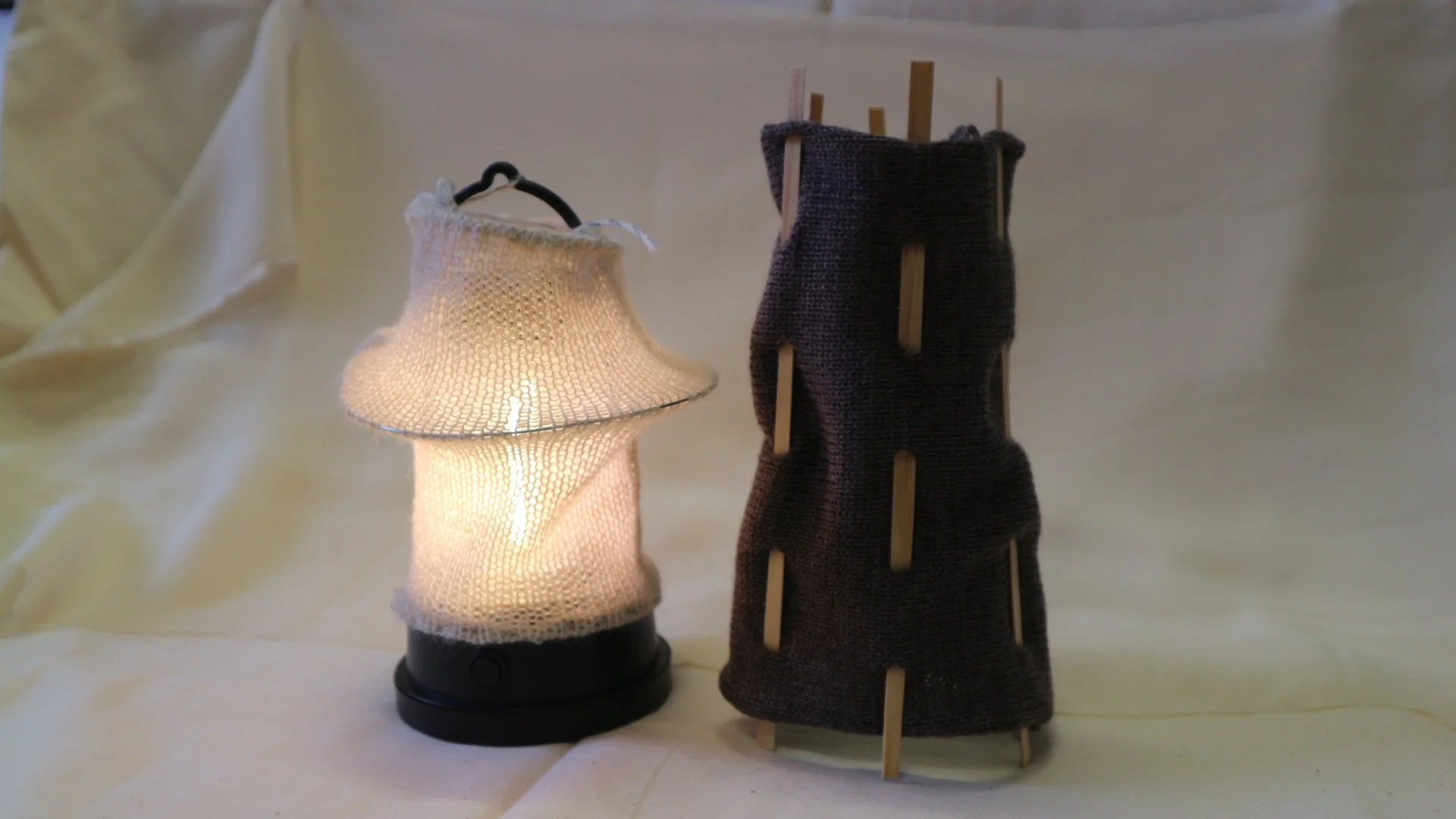
Combining these two ideas, I became drawn to the concept of knitted lamps. Previously, my peers had advised me to be less afraid of an explorative process; to let go of expectations of creating something polished, and instead allow the making process to guide me. So, without much research and detailed designing beforehand, I gathered hard materials I had access to and integrated them into my knitting swatches to push the boundaries of the fabric. This approach proved to be effective. I found myself developing ideas more rapidly, and the artefacts that emerged were unexpectedly beautiful.
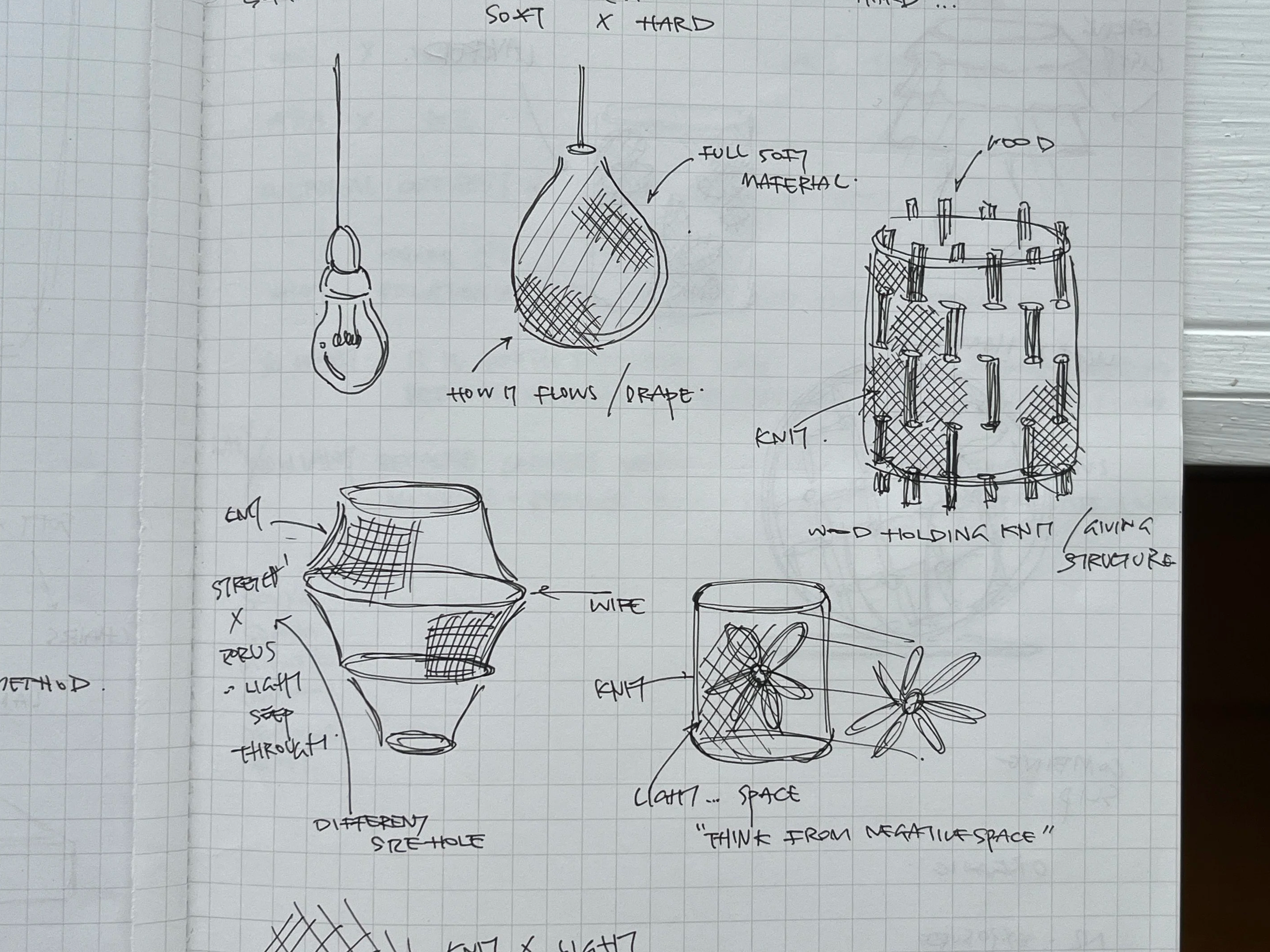
Knitted lamps (soft x hard material exploration)
While listening to the wānanga and reflecting on my own practice, my mind wandered to the relationship between soft and hard materials, because I had experimented with both in my previous making. I became interested in their contrast, especially how they oppose one another, yet also work harmoniously together. I realised that many products in the home environment utilise this combination, as people often seek qualities that balance comfort and stability, warmth and coolness.
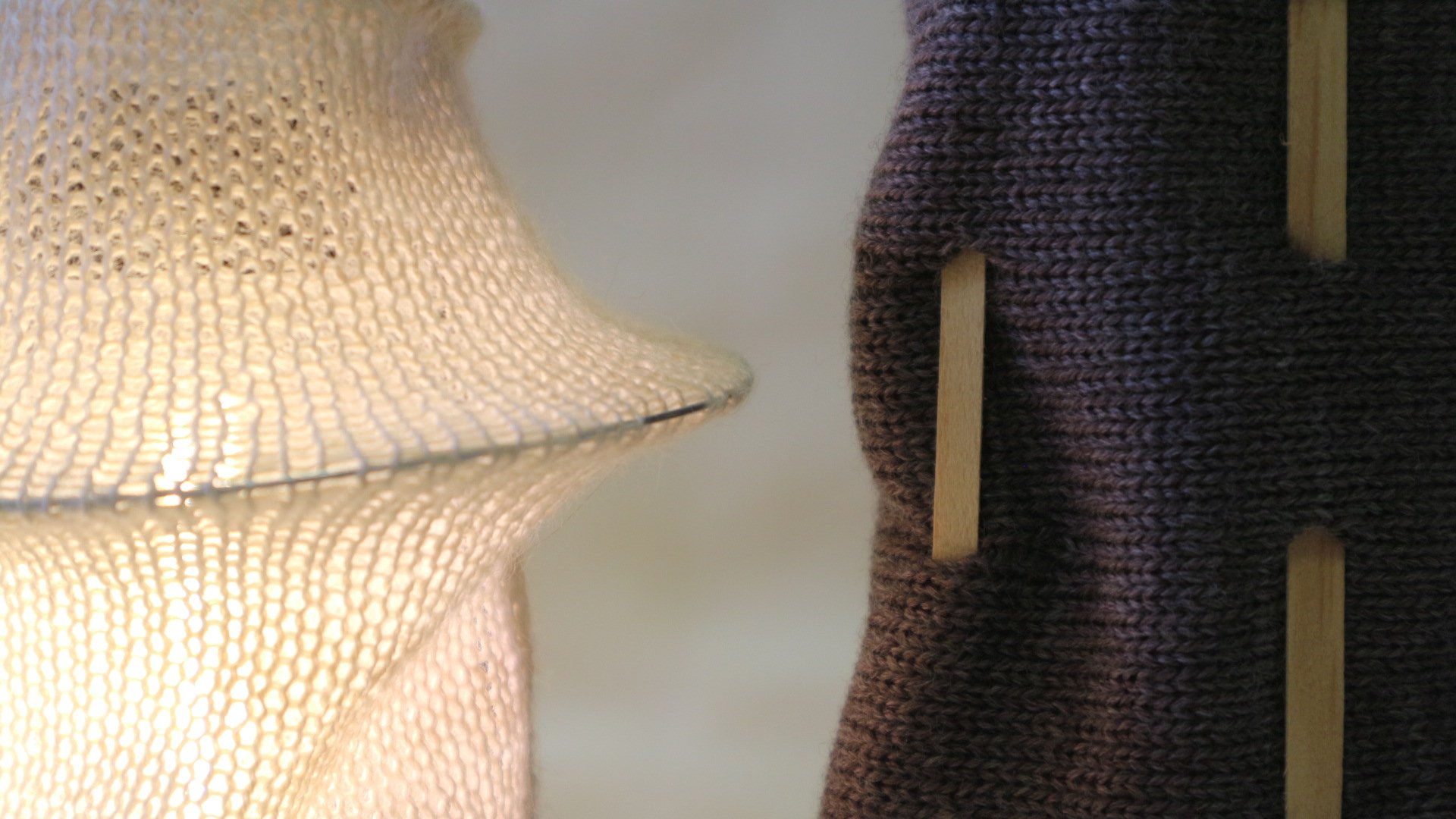
techniques. I found knitting in three dimensions harder, as it requires you to calculate the form, but it gave me a smooth, tight finish around my chosen form. Draping allowed for more creative freedom and felt more expressive as I was able to showcase the process of form building through textures and darts in the fabric.
During Karl’s talk, he discussed the idea of designing from the negative space. This made me think about the negative space within knitting. If the yarn is considered the positive space, then the holes between the stitches become the negative space. I realised that this negative space is emphasised when light passes through it, revealing its structure more clearly.
Adding wire between the knitting to stretch it made the light inside more prominent and radiated the warm feeling better. Although both structures used highly contrasting materials, they worked well together and brought out qualities that weren’t evident when used individually. The hard materials weren’t manipulated much, but the soft knit became structured, revealing new textures to wrap around the supports.
500 word reflection
Over the past few weeks, I’ve started to recognise the kinds of materials and methods I’m naturally drawn to. I consistently gravitate towards soft materials and textiles, as well as raw and organic materials, and I enjoy processes that feel handmade and artisanal. There’s something important to me about tactility and working with my hands, where the process feels slow, considered, and connected to the material. This has become a clear strength in my practice, and something I want to continue building on.
At the same time, I’ve realised that one of my biggest challenges has been my inability to fully trust the process. I often find it difficult to let myself be messy or experimental, and I tend to approach making with a fixed goal or outcome in mind. Because of this, I struggle to explore freely or make without expectations. There’s still a strong fear of failing or not reaching a certain standard, which holds me back. I’ve realised that my issue isn’t the outcomes I produce, but the way I approach the process, where I often avoid risk and unfamiliar exploration. Moving forward, I need to trust my making skills more and allow them to guide me, rather than trying to control the outcome too early. I think this shift is necessary if I want my work to feel more authentic and innovative.
Because of this mental and creative block, I also feel like I haven’t extended myself as much as I could have. This connects to feedback I received around week 3, where it was pointed out that I have a lot of exploration of individual materials and methods, but I need to start
thinking about how they can be combined. This idea of working “in between” materials and processes feels like an important next step for me. Because my discipline is product design, I was strongly encouraged to experiment with forms in combination with materials and methods in the future.
This interest feels closely tied to my identity. Growing up as Japanese-Chinese in New Zealand, I’ve always existed between cultures, learning how to navigate and connect different perspectives. This has led me to value the idea of bringing people and cultures together. I’ve begun to notice this value being connected in my material practice as well, especially in how I’m drawn to exploring the relationship between hard and soft materials, and how contrasting elements interact and inform one another.
From here, I want to continue exploring how opposing qualities can work together, such as soft vs hard, comfort vs stability or geometric vs organic forms. By combining materials and being more intentional with the form I design, I hope the connections I am starting to see can be applied and expressed though my making.